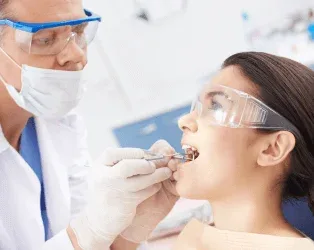
Oral, Dental, and Maxillofacial Surgery
Oral, dental, and maxillofacial surgery is a specialized field addressing diagnosis and tr…
Every interaction with our patients is an opportunity for us!

 Our Location
İhsaniye, Can 110 Sok No: 2\1A, 16130 Nilüfer/Bursa, Türkiye
 +90 (224) 222 0267
Call Us — 24/7 Support

In What Situations Is Root Canal Treatment Performed in Bursa?
Root canal treatment in the Bursa** region is generally performed when the pulp tissue inside the tooth becomes infected or is irreversibly damaged. Advanced tooth decay, cracks or fractures in the tooth, past trauma, and repeated fillings can cause inflammation of the dental nerve. Severe pain that begins at night, prolonged sensitivity to hot and cold, discomfort while chewing, and swelling around the gums may indicate the need for root canal treatment.
The primary goal of the treatment is to remove infected or damaged nerve tissue from the root canals, disinfect the affected area, and seal the tooth to prevent reinfection. The goal is to preserve the natural tooth in the mouth without extraction, whenever possible, and to maintain chewing function.
At the DT Groups Bursa dental clinic, the decision to proceed with treatment is not based solely on the patient’s complaint of pain. The level of infection, the structure of the tooth roots, and the condition of the surrounding tissues are assessed by evaluating the clinical examination, sensitivity tests, and digital X-ray images together. Based on this evaluation, a personalized treatment plan is created for the patient.
How Is Root Canal Treatment Performed?
Root canal treatment begins with the removal of infected or damaged tissue from inside the tooth. In the first stage, the area to be treated is numbed with local anesthesia. Then, a small access opening is created in the upper part of the tooth to reach the root canals. The infected nerve tissue is removed using specialized root canal instruments, and the root canals are carefully shaped. The goal of this stage is to prevent bacteria and infected tissue from remaining inside the canal as much as possible.
The shaped root canals are rinsed with special solutions to disinfect them. The disinfection process is important for reducing microorganisms within the canals and lowering the risk of reinfection. After the cleaned canals are dried, they are sealed leak-proofly with biocompatible root canal filling materials. In some cases of infection, treatment may not be completed in a single session, and a temporary medication may be placed inside the tooth.
In the final stage of root canal treatment, the top of the tooth is sealed with a filling. If there is significant tooth structure loss or a risk of fracture, a crown may be recommended to increase long-term durability. The restoration method to be used is determined based on the tooth’s location, the amount of remaining healthy tooth structure, and the forces exerted during chewing.
Examination and Diagnosis Process Before Root Canal Treatment in Bursa
Before root canal treatment in Bursa, the patient’s complaints are listened to in detail. The timing of the pain’s onset, whether it worsens at night, whether it is triggered by hot or cold, and whether sensitivity occurs during chewing are assessed. Prolonged sensitivity to hot and cold, throbbing nighttime pain, discomfort when pressure is applied to the tooth, or swelling around the gums may indicate damage to the tooth’s nerve or an infection.
In addition to the clinical examination, digital X-rays and vitality tests are used. X-rays allow for an examination of the tooth’s root structure, the number of canals, any infection at the root tip, and the condition of the surrounding bone tissue. However, the decision to treat is not based solely on X-rays; the patient’s symptoms and clinical test results are evaluated together.
An accurate diagnosis by an endodontist in Bursa or a Bursa dentist experienced in root canal treatment directly impacts the success of the treatment. This is because similar pain can also stem from a cracked tooth, gum disease, or adjacent teeth. Therefore, it is crucial to identify the correct tooth and the true cause of the pain.
How Long Does Root Canal Treatment Take in Bursa?
Root canal treatment in Bursa can usually be completed in one or two sessions. While the procedure can be finished in a single session for simple cases with limited infection, additional sessions may be required in cases of advanced infection, abscess, or inflammation at the root tip. The duration of a single session generally varies depending on the tooth’s structure and the complexity of the treatment.
One of the most important factors affecting treatment duration is the number of root canals in the tooth. Since front teeth usually have fewer canals, they can be treated more quickly. In large molars, however, the procedure may take longer because they have multiple and more complex root canals. In teeth that have previously undergone root canal treatment, the removal of old filling materials and the re-cleaning of the canals can also extend the treatment time.
The exact number of sessions and the duration of the procedure are determined following a clinical examination and X-ray evaluation. Rather than rushing to complete the treatment, ensuring that the canals are properly cleaned and sealed is more important for long-term success.
What Factors Determine Root Canal Treatment Prices in Bursa?
Root canal treatment prices in Bursa vary depending on the patient and the specific tooth. The main factors affecting pricing include the tooth’s location in the mouth, the number of roots and canals, the extent of the infection, and the difficulty of the procedure. While front teeth generally have fewer canals, molars may have multiple and complex canal structures. For this reason, the duration of treatment and the procedures performed may vary.
The imaging methods used, root canal shaping instruments, biocompatible filling materials, and whether the treatment is being performed for the first time or as a retreatment can also affect the price. In a tooth that has previously undergone root canal treatment, the procedure may become more extensive if old materials need to be removed and the infection needs to be cleaned out again. When evaluating root canal treatment costs in Bursa, rather than simply choosing the lowest price, you should also consider the dentist’s experience, sterilization standards, the materials used, and the post-treatment follow-up process.
The exact treatment cost can be determined following a clinical examination and digital X-ray evaluation. At the DT Groups Bursa dental clinic, after assessing the tooth’s current condition, root canal structure, and required restoration, the patient is provided with a personalized treatment plan and cost information.
Is Pain-Free Root Canal Treatment Possible in Bursa?
Pain-free root canal treatment in Bursa is largely possible thanks to the local anesthesia methods used today. Since the tooth and surrounding tissues are properly numbed before the procedure, patients generally do not feel pain during treatment. Although the patient may feel pressure, vibration, or a sensation of touch, these are generally not perceived as pain. Sharing any concerns with the dentist before the procedure can help ensure a more comfortable treatment experience.
In teeth with advanced infection or active inflammation, it may take more time and care for the anesthesia to take full effect. In such cases, additional anesthesia techniques may be used, and the treatment is continued while monitoring the patient’s comfort. Modern root canal instruments, digital imaging methods, and the use of a rubber dam—which isolates the tooth from saliva—also contribute to a safer and more controlled procedure. While short-term sensitivity may occur after treatment, severe or progressively worsening pain is not considered normal and should be evaluated by a dentist.
Is Pain After Root Canal Treatment Normal?
Pain and sensitivity following root canal treatment are considered normal to a certain extent, especially during the first few days. Although the infected tissue inside the tooth is removed during the procedure, the connective tissues surrounding the root may become temporarily sensitive as a result of the treatment. For this reason, you may feel mild discomfort when biting down, chewing, or eating hard foods. These symptoms are expected to subside over time.
During the healing period, it is important to avoid chewing hard foods on the treated side, maintain good oral hygiene, and follow the care instructions recommended by your dentist. If pain relievers are needed, they should only be used as directed by your dentist or a relevant healthcare professional. Avoiding excessive pressure on teeth with temporary fillings can help prevent damage to the filling and tooth fracture.
It is not normal for pain to gradually worsen, fail to subside within a few days, or for swelling to develop in the face or gums, or for fever or severe throbbing to occur. These symptoms may indicate a persistent infection, a high filling, or another problem. In such a case, you should contact the DT Groups Bursa dental clinic to schedule a follow-up appointment.
Why Does a Tooth That Has Undergone Root Canal Treatment Hurt?
A tooth that has undergone root canal treatment may be painful for a while afterward due to increased sensitivity in the surrounding tissues. Although the nerve tissue inside the tooth has been removed, there are living tissues around the root that attach the tooth to the bone. These tissues may exhibit temporary sensitivity during chewing due to mechanical stress caused by the treatment or a pre-existing infection.
Other causes of pain may include a filling that is too high relative to the occlusal level, an infection at the root tip that has not fully healed, a crack in the tooth, or a hard-to-detect additional canal that could not be thoroughly cleaned. If intense pressure is felt at a single point, especially when the teeth are closed, the height of the filling should be checked. Pain that persists for a long time, wakes you up at night, or is accompanied by swelling requires re-evaluation.
Mild sensitivity that decreases daily is generally associated with the healing process. However, if the pain intensifies, persists for weeks, or is accompanied by gum swelling, a follow-up appointment should not be delayed. Based on an assessment of the duration and nature of the pain, necessary X-ray examinations may be performed.
What Are the Signs of a Failed Root Canal Treatment?
Symptoms of a failed root canal treatment may not manifest the same way in every patient. Persistent or recurring pain in the treated tooth, sensitivity while chewing, swelling of the gums, and a pimple-like growth near the root may be observed. In some patients, a bad taste, discharge, or discoloration of the tooth may also be noticed. However, infections that do not cause symptoms can only be detected on follow-up X-rays.
Reasons for treatment failure include incomplete cleaning of the root canals, undetected additional canals, an inadequate root canal filling, or reinfection of the tooth. A leaking filling or crown can allow bacteria to re-enter the root canal system. In addition, vertical root cracks in the tooth can negatively affect the long-term success of the treatment.
The presence of these symptoms does not necessarily mean the tooth must be extracted. In appropriate cases, root canal retreatment can be performed to remove the old filling materials and clean the canals again. In some cases, surgical endodontic procedures targeting the root tip may be considered. In advanced cases where the tooth cannot be saved, extraction may be necessary. The most appropriate option should be determined based on clinical examination and imaging results.
How Should a Tooth Be Protected After Root Canal Treatment?
Careful maintenance is required from the very first days after root canal treatment to ensure the tooth remains healthy for a long time. In particular, hard, crunchy, or sticky foods should not be chewed on a tooth with a temporary filling. Avoiding eating until the effects of the anesthesia have completely worn off helps prevent unintentionally biting the lips or cheeks. Teeth should be brushed regularly, flossing should not be neglected, and the treated area should be kept clean.
Since teeth that have undergone root canal treatment no longer contain live nerve tissue, the risk of fracture may increase over time. Especially in molars with significant tooth structure loss, a filling alone may not be sufficient. In such cases, a crown or another restorative procedure may be recommended to protect the tooth from chewing forces. The appropriate method is determined based on the remaining healthy structure of the tooth.
Regular dental checkups are crucial for the long-term success of root canal treatment. During these checkups, the fit of the filling or crown, gum health, and the tissues surrounding the root are evaluated. Issues detected early can make it easier to intervene before tooth loss occurs.
DT Groups’ Approach to Root Canal Treatment at the Bursa Dental Clinic
The DT Groups root canal treatment process begins with a detailed evaluation of the patient’s symptoms. Using clinical examination, sensitivity tests, and digital imaging methods, the tooth’s root structure, the extent of the infection, and the condition of the surrounding tissues are assessed. Based on the findings, the number of sessions, the restoration to be performed, and the follow-up process are planned specifically for each patient.
During treatment, priority is given to maintaining patient comfort, administering effective anesthesia, and ensuring sterile working conditions. The cleaning, disinfection, and sealing of the root canals with appropriate materials are performed in a controlled manner. After treatment is completed, options for fillings or crowns that will preserve the tooth’s function are evaluated, and necessary follow-up appointments are scheduled.
Patients seeking an evaluation regarding root canal treatment or dental nerve treatment in Bursa can contact the DT Groups Bursa dental clinic to undergo a personalized examination. Early diagnosis and proper treatment planning can help prevent the progression of infection and preserve the natural tooth.
Frequently Asked Questions About Root Canal Treatment in Bursa
Is there any pain during root canal treatment?
Since local anesthesia is administered before the procedure, patients generally do not feel pain during root canal treatment. The patient may occasionally feel pressure or vibration. In cases of advanced infection, the anesthesia method may be re-planned based on the patient’s condition.
How long does root canal treatment take?
Treatment is usually completed in one or two sessions. The duration of each session may vary depending on the number of root canals in the tooth, the severity of the infection, and whether root canal treatment has been performed previously.
Can a tooth that has undergone root canal treatment develop cavities again?
Yes. Root canal treatment does not prevent the tooth from decaying again. New cavities can form if plaque builds up around the filling or crown. For this reason, regular brushing, flossing, and checkups are important.
When can I eat after root canal treatment?
It is recommended to wait until the effects of the anesthesia have completely worn off before eating. You should avoid hard foods with the tooth that has a temporary filling and chew on the opposite side as much as possible.
Does a tooth that has undergone root canal treatment need a crown?
Not every tooth that has undergone root canal treatment requires a crown. However, a crown may be recommended for teeth with significant tooth structure loss, those exposed to heavy chewing forces, or those at high risk of fracture.
Can a failed root canal treatment be redone?
In appropriate cases, root canal treatment can be repeated. The old root canal fillings are removed, and the canals are cleaned and disinfected again. In cases where treatment is not possible, surgical endodontics or tooth extraction may be considered.
Oral, dental, and maxillofacial surgery is a specialized field addressing diagnosis and tr…

Fixed and removable prosthetic solutions that restore the function and aesthetics of missi…

Root canal treatment, in which the inflamed or infected dental nerve is cleaned and the to…