
 Our Location

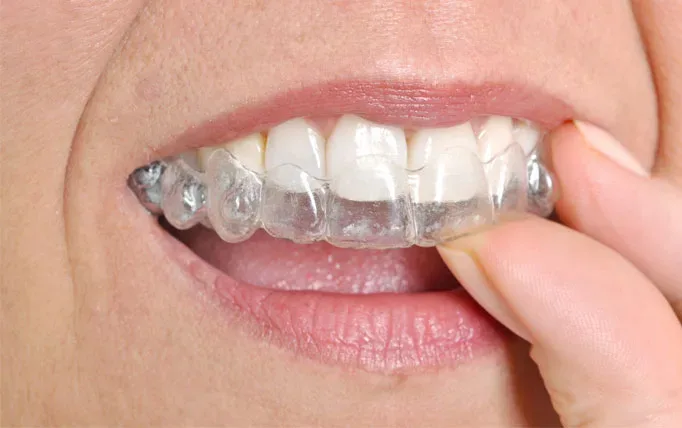
The process of digitalization in dentistry has brought about a major transformation, especially in orthodontic (braces) treatments. In the past, only metal brackets and wires were used to correct crowding and bite problems (malocclusion) in the teeth, whereas today clear aligners made of biocompatible thermoplastic materials have come to the forefront.
If you are troubled by irregular tooth alignment but are concerned about the appearance of metal braces or issues such as irritation or sores they may cause, wireless orthodontics may be a good option. You can find detailed, objective information on the processes of Bursa clear aligner treatment, the clinical application steps, and the medical rules patients should follow throughout treatment in this guide, which combines aesthetics and function.
This article has been prepared in full compliance with medical ethics and healthcare information regulations in order to inform the public about orthodontic treatment options.
What Is Clear Aligner Technology?
Clear aligner treatment is an orthodontic treatment method in which a series of removable, transparent appliances, planned with special software and produced with 3D printers to fit the patient's oral structure exactly, are used to bring the teeth into the desired ideal position.
A certain direction, continuous and gentle force is needed to move the teeth. In the traditional method, this force is provided by archwires passing through the brackets; in clear aligner treatment, medical thermoplastic aligners with shape memory provide this force. Each time the patient switches to a new aligner, the teeth move by millimetric amounts (usually 0.2 - 0.25 mm per aligner) and shift toward the planned new position.
Differences Between Wireless Orthodontics and Traditional Braces
In clinical evaluations, clear aligner treatment has some structural and usage-oriented differences for the patient compared with traditional fixed orthodontics:
Aesthetic Integrity: The fact that the aligners are almost completely invisible from the outside allows patients to receive treatment without aesthetic concerns in their social and professional lives.
Removability: Fixed braces remain attached to the teeth throughout treatment. Clear aligners, however, can be easily removed by the patient while eating, when consuming a hot beverage, or during an important meeting/event.
Support for Oral Hygiene: Removing food trapped between metal brackets requires extra brushes and time. In aligner treatment, the appliance can be removed, the teeth can be brushed as usual, and dental floss can be used comfortably. The risk of cavities and gum inflammation is greatly reduced.
Soft Tissue Friendly: In wire treatments, wire breakage or brackets irritating the inner surfaces of the lips and cheeks is a common occurrence. Thanks to the smooth surface of clear aligners, soft tissue injuries and canker sores are generally not seen.
Bursa Clear Aligner Treatment: Clinical Stage and Protocols
The wireless orthodontic process carried out in well-equipped dental clinics in Bursa and the surrounding area is conducted entirely through a digital workflow (CAD/CAM systems), unlike traditional impression methods.
1. Clinical Examination and Three-Dimensional Digital Scanning
At the first step of treatment, it is assessed whether the patient's orthodontic problem is suitable for clear aligners. If suitability is confirmed, instead of traditional dough-like impression materials, three-dimensional maps of the teeth are created within seconds using intraoral scanning cameras. In addition, the necessary radiographic X-rays (panoramic and cephalometric) and clinical photographs are taken.
2. Treatment Simulation and Digital Planning
The digital data obtained is transferred to special orthodontic software. The doctor plans in this software at what millimetric angles and in what sequence the teeth will move. The greatest advantage of this stage is that the patient can see, before treatment even begins, how long the treatment will take, how many aligners will be used, and how the teeth will look at the end of treatment as a three-dimensional simulation on the computer screen.
3. Attachment Placement and Delivery of Aligners
When the set of aligners produced with 3D printers in domestic or international laboratories reaches the clinic, treatment begins. In order for the clear aligners to grip the teeth and perform complex root movements such as rotation, intrusion, and extrusion, tiny tooth-colored composite filling particles called "Attachments" are placed on the teeth. The attachments are removed from the teeth without leaving any marks at the end of treatment.
4. IPR (Interproximal Reduction - Abrasion) Procedure
Especially in cases with significant crowding but no need for tooth extraction, very small sanding procedures that do not damage the enamel, such as 0.1 to 0.3 millimeters from the interproximal surfaces of the teeth, may be performed to create space for tooth movement (IPR).
Daily Life and Rules During Treatment
The success of clear aligner treatment depends as much on the perfection of medical planning as on the patient's disciplined compliance with the treatment. It is not possible for aligners to create an effect on their own; the effect appears with regular use of the aligners.
Duration of Use: To prevent interruption of the bone resorption and formation (remodeling) process needed in the tooth roots, it is a medical necessity for the aligners to be worn for at least 20 to 22 hours a day. They should only be removed during main meals and when consuming hot beverages.
Eating and Drinking Habits: While wearing the aligners, only room-temperature or cold water may be consumed. Hot foods and drinks such as tea, coffee, and soup instantly melt the thermoplastic structure and distort the aligner's form. Colored beverages, on the other hand (wine, sour cherry juice, etc.), cause the aligner to lose its transparency.
Aligner Cleaning: Every morning and evening, when the aligners are removed from the mouth, they should be cleaned under running cold or lukewarm water (definitely not hot water) using liquid soap and a soft brush. Toothpastes containing abrasive granules should not be preferred for brushing, as they will scratch the aligner surface and make it dull. Special cleaning tablets sold in pharmacies can also be used in the weekly routine cleaning.
Are Clear Aligners Suitable for Every Case?
Thanks to advances in materials engineering, clear aligners, which in the past were used only for mild crowding, can now be successfully applied in many cases involving deep bite, open bite, crossbite, and complex orthodontic cases requiring tooth extraction.
However, in cases with severe skeletal anomalies caused by the position of the lower and upper jaw bones and requiring orthognathic surgery (jaw surgery), clear aligners alone are not sufficient. A comprehensive examination is the only medical criterion that determines the suitability of the case.
Retention Period
Whether performed with metal braces or clear aligners, all orthodontic treatments are followed by a tendency for the teeth to return to their previous crowded state (relapse). It takes time for the intraosseous fibers to adapt to the new position. After treatment is completed and the aligners and attachments are removed, a thin fixing wire (Lingual Retainer), invisible from the outside, is bonded to the inner (tongue-facing) surfaces of the teeth. In addition, the patient is given protective Essix aligners to wear only at night. This retention process is the most inseparable part of treatment to preserve the achieved straight tooth alignment for life.
An aesthetic and functional tooth alignment is the foundation of oral health. The wireless orthodontic solutions offered by digital dentistry have made the treatment process much more predictable and comfortable compared with the past.
Legal Notice and Information
This page content is intended solely to inform the public about orthodontic treatment processes within the framework of Law No. 1219 on the Practice of Medicine and Branches of Art and the rules of the Ministry of Health's Regulation on Promotional and Informational Activities in Health Services. The information contained herein cannot be used in the diagnosis or treatment of diseases, does not include medical guarantees such as "treatment duration" or "definite success," and does not constitute unfair competition. In order to have the most suitable treatment plan for your oral and jaw structure determined, you must undergo an examination by directly consulting an orthodontist or dentist.