
 Our Location

Bursa Root Canal Treatment: Medical Stages of the Tooth-Saving Procedure
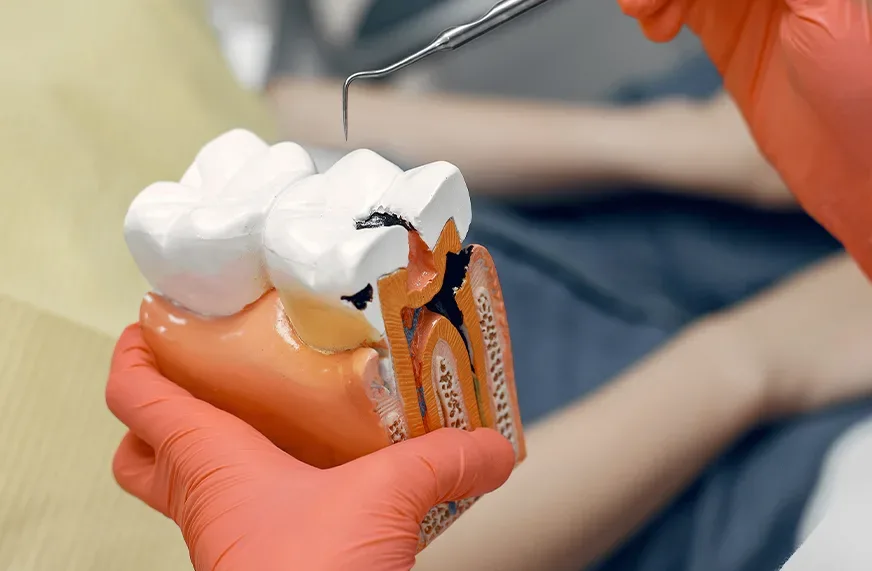
Deep within the hard enamel layer, which is the outermost layer of the tooth, and the dentin tissue just beneath it, there is a center made up of the blood vessel and nerve bundle that gives the tooth its vitality. In medical terminology, this soft tissue is called the "pulp," and in everyday language, the "tooth pulp" or "tooth nerve." It plays a vital role in the development and nourishment of the tooth. However, when bacteria reach this protected area for various reasons, the pulp tissue becomes infected and inflamed. Endodontics (root canal treatment), one of the specialties of dentistry, is a microsurgical procedure that cleans out this infected or non-vital (necrotic) pulp tissue and allows the tooth to remain in the mouth.
The treatment protocols applied in the field of endodontics in Bursa aim to save the tooth from extraction and ensure the continuity of natural chewing function. Tooth extraction is always considered a last resort; because implants or bridge prostheses used to replace a lost tooth cannot fully match the biomechanical harmony of a natural tooth. In this guide, we will examine the requirements of root canal treatment, the symptoms patients may experience, and the treatment processes carried out in the clinical setting in detail in the light of medical facts.
Why Does Root Canal Treatment (Endodontics) Become Necessary?
In a healthy tooth, the pulp tissue is perfectly isolated from external factors by the enamel and dentin layers. The disruption of this insulation causes the bacteria naturally present in the mouth to seep into the inner parts of the tooth. The main pathological conditions that make root canal treatment necessary are as follows:
Deep Tooth Decay: Untreated cavities that progress over time pass through the dentin layer and reach the pulp chamber directly. The acids and toxins secreted by bacteria trigger irreversible inflammation (pulpitis) in the nerve tissue.
Physical Trauma: A severe blow to the tooth from the outside (a fall, impact, or accident) can cut off blood flow at the root tip even if there is no visible fracture in the tooth. The pulp tissue, deprived of nourishment, gradually loses its vitality and becomes open to infection.
Repeated Dental Procedures: Having multiple deep fillings or crown procedures performed on the same tooth over the years can cause chronic stress and sensitivity in the nerve tissue, leading to degeneration of the pulp over time.
Advanced Gum Disease (Periodontitis): Severe infections in the bone and gums surrounding the tooth can seep in from the root tip (apex) and infect the nerve tissue from bottom to top.
What Symptoms Indicate the Need for Root Canal Treatment?
A tooth that needs root canal treatment usually gives the patient very clear clinical signals. However, in some cases, especially chronic cases where the nerve tissue has completely lost its vitality, cyst formation may be observed insidiously without any pain. The most common clinical symptoms are as follows:
Severe toothache, especially starting at night, throbbing in nature, and not responding to painkillers.
Sensitivity that occurs when hot or cold foods are consumed and continues for minutes even after the trigger is removed.
Sharp pain felt while chewing or when the tooth is touched from the outside.
Swelling in the face, cheek, or neck area at the level of the affected tooth due to the spread of the infection from the root tip to the jawbone.
A noticeable grayish discoloration or darkening of the tooth from the inside out.
The formation of a pimple-like bump on the gums (fistula) and occasional discharge of pus from this bump.
Stages of Root Canal Treatment in the Clinical Setting
Bursa root canal treatment procedures are carried out within a precise protocol using current medical devices and magnification systems (radiography, endodontic microscopes, apex locators). The procedure is usually completed in one or two sessions depending on the anatomical difficulty of the tooth and the extent of the infection. The steps of treatment progress systematically:
Radiological Examination and Diagnosis: The physician first analyzes the tooth's root structure, the number of canals, the spread of the infection within the bone, and the condition of the surrounding tissues using digital X-ray images.
Local Anesthesia: To ensure that the treatment process is completely painless, the tooth and surrounding tissues are numbed with powerful local anesthetic solutions. Since numbing can be difficult in cases where the tooth nerve is infected, the physician applies additional anesthesia techniques if necessary.
Isolation (Rubber Dam Application): To isolate the tooth to be treated from saliva and bacteria in the mouth, it is surrounded by a special rubber sheet (rubber dam). This step is critical to treatment success.
Cavity Access and Reaching the Canals: After the decayed tissues are completely removed, a small access opening is made from the top of the tooth toward the pulp chamber. The openings of the root canals are identified.
Cleaning and Shaping the Canals: Using flexible rotary instruments made of titanium alloy, the infected nerve tissue and bacteria inside the root canals are completely removed. At the same time, the canals are disinfected by being repeatedly irrigated with special antibacterial solutions such as sodium hypochlorite and EDTA.
Root Canal Filling (Obturation): The completely cleaned and shaped cavities are tightly filled all the way to the root tip in a leak-proof manner with "gutta-percha" and special root canal sealers, which are tissue-friendly materials. This prevents bacteria from re-entering the tooth.
Final Restoration: Teeth that have undergone root canal treatment may become brittle over time because they lose their vitality. Depending on the amount of remaining healthy tooth structure, the tooth is restored either with a composite (light-cured) filling or with a more durable porcelain/zirconia crown, and the treatment is completed.
Post-Treatment Recovery Period and Warnings
After root canal treatment is completed successfully, the body needs a healing period to repair the damage at the root tip. During the first few days after the procedure, it is physiologically expected to experience a slight pressure sensation or sensitivity in the tooth while chewing. Mild painkillers with anti-inflammatory properties recommended by your physician will help you get through this period comfortably.
Until a final restoration (permanent filling or crown) is placed on the treated tooth, hard foods should not be chewed on that side. If the temporary filling falls out, a physician should be consulted without delay. Also, it is a common misconception that a tooth that has had root canal treatment cannot decay. Even though the tooth nerve has been removed, its outer surface is still vulnerable to bacterial acids. Therefore, daily tooth brushing, flossing, and routine dental checkups should continue consistently for life.
Health Services Information and Warning Text
This article has been prepared in full compliance with the rules of the "Regulation on Promotional and Informational Activities in Health Services" solely for the purpose of objectively informing the public about disease processes and medical procedures.
None of the information presented here replaces a medical diagnosis, a definitive treatment promise, a guaranteed outcome, or a doctor's advice. Root canal systems have extremely complex anatomical structures, and each patient's infection status, bone healing capacity, and biological response to treatment are entirely individual. If you have the relevant symptoms, you must apply to a licensed healthcare institution and undergo radiological and physical examination in a clinical setting by a specialist dentist in order to plan your tooth-saving treatments and determine the most reliable method for you. Please avoid forming expectations of diagnosis or treatment based on general information on the internet.