 Our Location

Bursa Dental Implant Treatment: A Lifelong Permanent Solution for Your Missing Teeth
A healthy, fully functional, and aesthetic dental arch is not only the foundation of a beautiful smile, but also of a healthy digestive system and a high quality of life. When teeth are lost for various reasons (decay, gum disease, trauma), the resulting gaps not only create an aesthetic concern; they also impair chewing function, lead to speech problems, and cause bone loss in the jaw that becomes difficult to reverse over time. While in the past such missing teeth were treated with removable dentures (plates) or bridges made by cutting the adjacent healthy teeth, today the gold standard of modern dentistry is unquestionably dental implant surgery.
With its advanced healthcare infrastructure, well-equipped clinics, and expert oral surgeons, Bursa dental implant treatment has become a leading center in both local and international health tourism. If you also want to leave behind the loss of confidence and function caused by missing teeth, you are ready to discover the tissue-friendly miracle of titanium. In this comprehensive guide, we will examine all the details step by step, from what dental implants are and their scientific background to the treatment stages and pricing criteria in Bursa.
What Is a Dental Implant and How Does It Integrate with the Body?
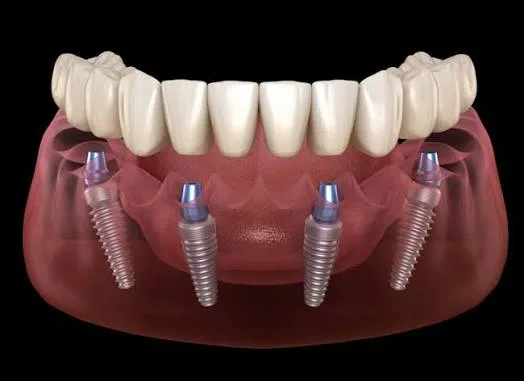
A dental implant is, in the simplest terms, an artificial screw system usually made of titanium that is surgically placed into the jawbone to replace the missing tooth root. After these screws are placed into the jawbone, an artificial tooth (crown) made of porcelain or zirconium is attached on top, creating a structure that makes the patient feel as if it were their own natural tooth.
The Biocompatibility of Titanium and the Osseointegration Process
The revolution of dental implants in medicine began in 1952 with the accidental discovery of the concept of "osseointegration" by Swedish orthopedic surgeon Prof. Dr. Per-Ingvar Brånemark. Titanium is one of the rare metals that is not perceived by the human body as a "foreign substance" and is completely tissue-friendly (biocompatible).
When the implant is placed in the jawbone, the body's immune system does not reject this titanium surface. On the contrary, bone-forming cells (osteoblasts) attach to the implant's microscopically rough surface and build a new, living bone network around it. At the end of this biological fusion process, which takes approximately 2 to 6 months, the titanium screw becomes almost a natural part of the jawbone. According to data published by the International Dental Federation (FDI) and various academic medical journals, the long-term success rate of dental implants applied with the correct surgical technique and quality materials is extremely high at 98%.
Who Can Get Implants, and Who Are They Not Suitable For?
Although there is a common belief in society that "implants cannot be done for every patient," the group of patients for whom implants cannot be applied has become quite small thanks to current medical technologies. In general, anyone whose bone development is complete (on average over 18 years of age) and whose overall health condition is stable can undergo implant treatment. However, some special cases require extra attention:
Diabetes Patients: If the disease is under control (HbA1c levels are within appropriate ranges), implants can be applied comfortably. In uncontrolled diabetes, however, the procedure is risky because wound healing will be delayed.
Osteoporosis (Bone Loss): In patients with systemic bone loss, the dose and duration of bisphosphonate-type medications used are evaluated by the physician before making a decision.
Heavy Smoking: Smoking significantly reduces the success of the implant's fusion with the bone (osseointegration) by impairing blood circulation in the mouth and the oxygenation of the tissues. For this reason, quitting smoking before the operation and during the healing period is strongly recommended.
Dental Implant Treatment Stages in Bursa
Implant procedures performed in modern dental clinics in Bursa are carried out through digital workflows designed to maximize patient comfort. The treatment consists of three main phases: "planning", "surgery", and "prosthetics".
Digital Planning and 3D Tomography Stage
The secret to a successful implant treatment lies in the millimeter-level planning done before sitting in the treatment chair. Standard 2D X-rays do not provide sufficient information about the width and density of the jawbone. Therefore, in Bursa dental implant clinics, the first step is a 3D Dental Volumetric Tomography (CBCT) scan.
Thanks to this digital data, the doctor can see the thickness of your jawbone, the location of the nerve canals, and the sagging condition of the sinus cavities in a three-dimensional environment. In fact, before the surgical procedure, a "virtual implantation" is performed on the computer screen, and the angle and depth at which the screw will be placed are determined in advance. If necessary, surgical guide plates (guides) are printed with 3D printers and "flapless implant" (flapless surgery) techniques are applied.
Surgical Operation and Healing (Waiting) Period
Implant surgery is a completely painless and routine procedure performed under local anesthesia (numbing only the relevant area).
Placement: After numbness is achieved, a small incision is made in the gum and a socket suitable for the implant's diameter is prepared in the bone, then the titanium screw is placed into the bone (placement of a single implant takes an average of 15-20 minutes).
Closure: The implant is covered and the gum is stitched, or a healing abutment is placed. After the procedure, the patient leaves the clinic walking without feeling any pain.
Waiting (Fusion) Period: On average, 2-3 months are expected for the lower jaw and 3-6 months for the upper jaw (due to the spongy structure of the bone) for the implant to fuse with the bone. If the patient has undergone sinus lifting or bone powder (graft) treatment, this period may be longer.
Prosthetic Stage: After the implant has fully integrated with the bone, zirconium or porcelain teeth produced in the laboratory to suit your facial golden ratio and skin tone are fixed onto the implant by screwing or bonding.
Implants vs. Bridge Prostheses: Why Are They More Advantageous?
Patients who want to replace missing teeth are often undecided between classic bridge treatment and implants. However, there are major differences between these two methods that directly affect the patient's biology.
Comparison with Traditional Methods
In the table below, you can see the structural and functional differences between traditional bridges and modern implant treatment:
Comparison Criterion | Bridge Prosthesis (Traditional) | Dental Implant (Modern) |
Effect on Neighboring Teeth | The adjacent healthy teeth must be cut and reduced to provide support. | Adjacent healthy teeth are absolutely untouched; it works independently. |
Bone Loss Condition | Because chewing force is not transmitted in the extraction gap, jawbone loss continues. | Since it acts as a root, it transmits pressure to the bone and completely stops bone loss. |
Service Life | Average 7 - 10 years (should be replaced if the teeth underneath decay). | With proper oral care, it is permanent for life. |
Chewing Force | Provides a chewing sensation of about 70% of a natural tooth. | Provides nearly 100% chewing strength and comfort compared to a natural tooth. |
"Implant treatment is the only dental restoration method in dentistry that comes closest to mimicking nature and preserving tissue."
Implant Brands, Quality Standards, and Pricing
One of the topics patients research most when stepping into the treatment process is the brand of implant to be used and the cost of treatment. There are hundreds of different implant brands produced worldwide.
How Should the Right Implant Brand Be Chosen?
Choosing the implant brand is a critical turning point in terms of the long-term success of the treatment. The main elements that determine a brand's quality are:
R&D History and Scientific Publication Support: Instead of brands that have just entered the market and whose long-term success results have not yet been proven, brands with at least 15-20 years of R&D history and thousands of scientific articles written about them should be preferred (such as first-class brands of Swiss, German, and U.S. origin).
FDA and CE Approvals: The material to be used must be approved by international health authorities (U.S. FDA or European CE) as a requirement for biocompatibility.
Spare Parts Guarantee: In a system that will remain in your mouth for life, being able to access intermediate parts (abutments, etc.) even 20 years later is the biggest advantage of choosing a global brand.
The Main Factors Determining Implant Prices in Bursa
Bursa dental implant prices cannot be evaluated through a fixed package program. Because every patient's oral structure is unique like a fingerprint. The main factors that change the price range are:
The Brand and Origin of the Chosen Implant: There are price differences based on foreign currency between Premium brands manufactured in Switzerland or Germany and brands manufactured domestically (Turkish) or in South Korea, due to differences in technology and patents.
The Difficulty Level of the Surgical Procedure: If there is not enough bone in the patient's jaw and advanced surgical support such as sinus lifting, bone graft (bone powder), or membrane is needed, the operation cost naturally increases.
Superstructure (Crown) Material: Whether the aesthetic tooth placed on the implant is standard metal-supported porcelain or zirconium with high light transmittance is another important factor affecting the price.
The Expertise of the Doctor and the Clinic: The experience of the doctor performing the operation in the field of oral surgery, the sterilization conditions provided by the clinic, and its technological equipment directly shape the treatment costs.
In Conclusion; Living with missing teeth is not fate, but a postponed health problem. Bursa dental implant treatment promises to restore your former natural smile, chewing power, and most importantly, the confidence you lost, with the advanced radiological capabilities it offers, personalized surgical planning, and highly biocompatible titanium materials. Without sacrificing your other teeth, this modern treatment, which you can use for life, is the biggest investment you can make in yourself and your health.
Now It's Your Turn! Are you also having difficulty eating or smiling because of missing teeth in your mouth right now? While researching implant treatment, what is the main question that worries you the most and keeps you from taking action? (Pain, price concerns, or the length of treatment?)
Share your questions, concerns, or past dentist experiences with us in the comments section below. We will be very pleased to answer all your questions with scientific data and expert opinions!