
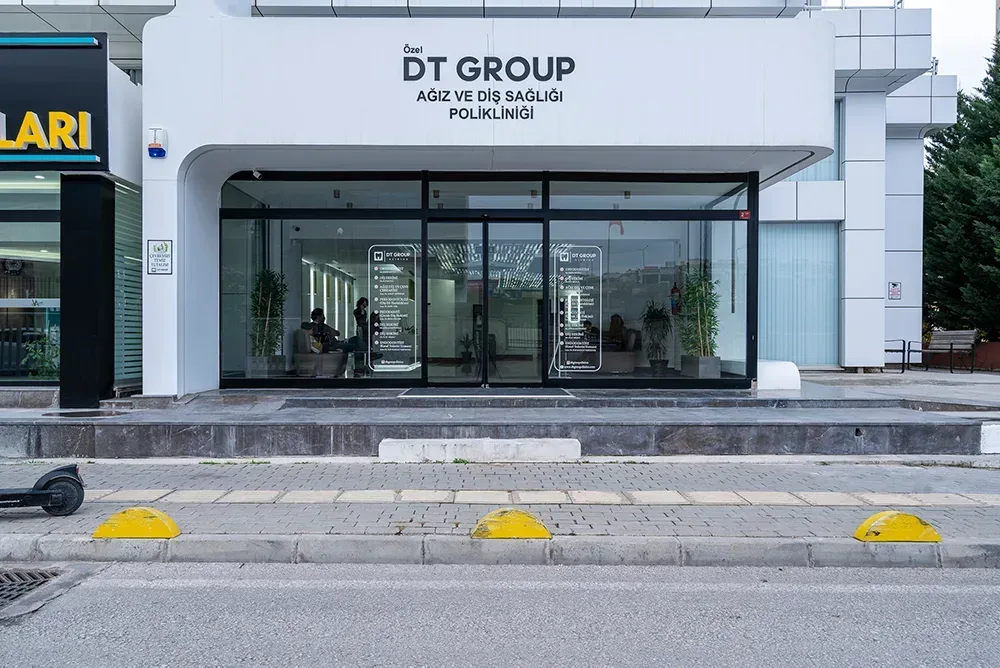
 Our Location

Bursa Nilüfer Orthodontist: A Scientific Guide to Healthy Teeth and Jaw Structure
Oral and dental health is not merely an aesthetic smile; it is a holistic anatomical balance encompassing chewing, speech, respiration, and the health of the temporomandibular joint (TMJ). Crowding in the teeth, spaced arrangements (diastema), or incorrect relationships between the upper and lower jaws (malocclusion) can disrupt the balance of the biomechanical system. The authority to diagnose, prevent, and correct such structural disorders within biological limits belongs to orthodontic specialists who have completed at least 4 years of specialty/doctoral training after 5 years of education at a faculty of dentistry.
Nilüfer district, which stands out with Bursa's medical infrastructure, is an important location for oral health services with its expert staff and clinics equipped with advanced technology. Choosing the right physician and a treatment carried out under expert guidance addresses both functional and aesthetic expectations. In this clinical article, we will examine in detail the diagnostic methods, current appliance technologies, principles of cellular tooth movement, and the retention phase carried out by a bursa nilüfer orthodontist.
Orthodontic Anomalies and the Importance of Specialist Diagnosis
Orthodontic disorders are not only an aesthetic concern, but medical conditions that directly affect oral hygiene and systemic health. Correctly analyzing these anomalies is the first and most critical step in treatment success.
Types of Malocclusion and Their Biological Effects
Tooth alignment disorders (malocclusions) may develop due to genetic factors, childhood sucking habits (thumb sucking, prolonged pacifier use), or early loss of baby teeth. According to data from the World Federation of Orthodontists (WFO), untreated orthodontic anomalies pave the way for uneven wear on tooth surfaces, gum inflammation, and chronic jaw joint pain (TMJ dysfunction).
In clinical diagnosis, malocclusions are basically examined in three classes:
Class I Malocclusion: A condition in which the position of the jawbones relative to each other is normal, and only crowding or rotation of the teeth is present.
Class II Malocclusion: The lower jaw is positioned backward relative to the upper jaw, or the upper front teeth are excessively protrusive.
Class III Malocclusion: The lower jaw or lower teeth are positioned in front of the upper jaw (underbite).
An expert bursa nilüfer orthodontist performs advanced radiographic analyses to determine whether these anomalies are skeletal or purely dental.
Early Diagnosis During the Growth and Development Period
The American Association of Orthodontists (AAO) recommends that children have their first orthodontic examination around age 7. During this age period, the permanent teeth begin to replace the baby teeth, and possible skeletal discrepancies can be detected at an early stage. When intervention is made at an early age, the direction of the jawbones can be guided by taking advantage of the child's growth spurt (face mask, jaw expansion appliances, etc.). In this way, major surgical operations that may be needed in adulthood (orthognathic surgery) are prevented. Periodic check-ups conducted under the guidance of an experienced bursa nilüfer orthodontist allow the growth and development process to be evaluated at the most appropriate time.
Current Treatment Methods in Bursa Nilüfer Orthodontist Options
Advances in material science and digital technologies have made orthodontic treatment options highly diverse in terms of both aesthetics and comfort.
Fixed Orthodontic Appliances (Metal and Porcelain Brackets)
Fixed orthodontic treatments are applied through brackets attached to the tooth surface with special biocompatible adhesives and arch wires passing through these brackets.
Metal Brackets: They are the most established components of orthodontic practice in terms of durability and mechanical force transmission. Their biomechanical control is extremely high.
Porcelain (Ceramic) Brackets: Ceramic brackets, which are tooth-colored or transparent, are often preferred for adult patients with high aesthetic concerns.
Tooth movement occurs thanks to the light and continuous pressure applied by the brackets to the wire. While bone-resorbing cells (osteoclasts) work on the side under pressure, bone-forming cells (osteoblasts) create new bone tissue on the tension side. An expert bursa nilüfer orthodontist prevents damage to the tooth tissue and roots by adjusting the amount of force with millimetric precision.
Wire-Free Orthodontics (Clear Aligner / Aligner Treatments)
With the development of digital dentistry, clear aligner systems that straighten teeth without braces have become widely used in clinical practice.
Digital impressions taken with intraoral 3D optical scanners are simulated in a computer environment. The movement of the teeth within each aligner is planned with micron-level precision angles. Patients wear the aligners for an average of 20-22 hours a day and usually switch to a new aligner every 1-2 weeks. The ability to remove the aligners while eating and brushing teeth makes it easier to maintain oral hygiene and significantly reduces the risk of gum inflammation. Clear aligner treatments carried out by an expert bursa nilüfer orthodontist adapt to the patient's daily pace of life by making clinic visit frequency more flexible.
The table below compares the main clinical features of fixed brackets and clear aligner treatments:
Comparison Criterion | Fixed Metal Brackets | Clear Aligner Treatment |
Visibility and Aesthetics | Distinct metal appearance | Almost completely invisible |
Ease of Oral Hygiene | The area around the brackets must be cleaned with special brushes and floss | Routine brushing is performed after removing the aligner |
Dietary Restriction | Hard and sticky foods are restricted | There is no restriction because the aligner is removed during meals |
Patient Compliance (Cooperation) | Fixed, works independently of patient compliance | Wearing it regularly for 20-22 hours a day is medically necessary |
Follow-Up Appointment Frequency | Usually every 4-6 weeks | Can be scheduled every 6-8 weeks depending on need |
Orthodontic Treatment Process and the Retention Phase
Orthodontic treatment is not limited to the application of brackets or aligners; it requires a disciplined clinical follow-up process.
Stages of Diagnosis and Treatment Planning
A comprehensive orthodontic process begins with clinical analysis and the collection of detailed diagnostic data:
Clinical Examination and History: The patient's general health history, temporomandibular joint status, and expectations are evaluated.
Radiographic Examination: While panoramic X-rays are used to examine the root structures and jawbone, cephalometric X-rays are used to analyze the skull base and jaw angles.
3D Digital Scanning and Photography: Intraoral and facial photographs are taken to perform biometric measurements.
Appliance Application: Brackets suitable for the chosen treatment method or the first set of clear aligners is applied.
Treatment duration varies depending on the complexity of the case, the patient's age, and the biological tissue response. For a successful outcome, periodic check-ups must be continued without interruption under the guidance of an experienced bursa nilüfer orthodontist.
The Vital Role of Retention Treatment
When the brackets or aligners are removed at the end of orthodontic treatment, it takes time for the periodontal fibers around the teeth (cellular memory) and the bone tissue to fully adapt to the new position. The tendency of the teeth to return to their former crowded state is called "relapse".
Two main methods are used in retention treatment applied to prevent the risk of relapse:
Fixed Retainer Wire: A thin bent wire bonded to the inner (tongue-facing) surface of the front teeth, invisible from the outside.
Essix (Clear Retention) Aligners: Clear protectors worn during nighttime sleep that stabilize the position of the teeth.
The retention period carried out under the supervision of an expert bursa nilüfer orthodontist supports the lifelong preservation of the achieved aesthetic and functional result.
Orthodontic interventions are preventive and corrective medical practices that can be applied at any age and improve both oral health and social confidence. Leaving tooth crowding untreated may pave the way for tooth loss, gum disease, and jaw joint disorders as age advances. With accurate diagnosis and treatment planning carried out under the guidance of an expert bursa nilüfer orthodontist, you can achieve a healthy, aesthetic, and balanced oral structure.