
 Our Location

Bursa Periodontology Clinic: A Guide to Gum Diseases and Periodontal Tissue Treatment
The foundation of a healthy oral structure is formed not only by decay-free teeth, but also by the surrounding tissues that hold these teeth firmly within the jawbone. The gums, the cementum layer surrounding the tooth root, periodontal ligaments, and the jawbone together provide the biomechanical support of the tooth. Data from the World Health Organization (WHO) and the European Federation of Periodontology (EFP) show that severe gum diseases affect approximately 19% of the adult population worldwide and are the primary cause of tooth loss in adults.
However, gum diseases often progress silently in the early stages without causing pain. Mild bleeding seen during brushing is often overlooked by many individuals; yet this is the first sign of an underlying chronic inflammation. A Bursa periodontology clinic serving in centers with advanced healthcare infrastructure and expert physicians in Bursa aims to stop gum and jawbone inflammation at an early stage and help natural teeth remain in the mouth. In this comprehensive clinical guide, we will examine the mechanism of gum disease development, current treatment methods, and all the medical details of Bursa periodontology clinic protocols.
What Is Periodontology and How Do Gum Diseases Progress?
Periodontology is the branch of dentistry that preserves the health of the soft and hard tissues surrounding the teeth, diagnoses inflammatory diseases that develop in these tissues, and treats them. Periodontology specialists (periodontists) complete doctoral or specialty training in the relevant department after five years of undergraduate dental education. The specialist physicians working within a Bursa periodontology clinic manage the biological integrity of the tissues around both natural teeth and dental implants.
Clinical Differences Between Gingivitis and Periodontitis
Gum disease begins with microbial dental plaque accumulating on tooth surfaces due to inadequate oral hygiene. When plaque is not cleaned regularly, it combines with minerals in saliva and turns into hardened calculus (tartar). This process progresses through two main clinical stages:
Gingivitis (Early-Stage Gum Inflammation): This is the first stage of the disease. Bacterial toxins cause redness, swelling, sensitivity, and bleeding in the gums during brushing. At this stage, there is no bone resorption yet in the jawbone supporting the teeth. With proper professional cleaning and regular care, gingivitis heals completely.
Periodontitis (Advanced Periodontal Tissue Destruction): Untreated gingivitis eventually progresses into deeper tissues. The healthy sulcus between the gum and the tooth deepens, and infection pockets called "periodontal pockets" form. Bacteria begin to resorb the jawbone; as a result, the gums recede, the teeth loosen, and if not treated, even healthy teeth can be lost.
Symptoms of Gum Disease and Its Relationship with Systemic Health
Clinical research proves that chronic periodontal inflammation in the mouth not only leads to tooth loss but also affects overall body health through bacteria entering the bloodstream. There is a bidirectional interaction especially between uncontrolled diabetes and periodontitis; while gum inflammation makes blood sugar control more difficult, high blood sugar also accelerates gum destruction. In addition, there are scientific links between periodontal infections and cardiovascular diseases as well as the risk of preterm birth.
If you notice even one of the following symptoms, you should consult a specialist at a Bursa periodontology clinic without delay:
Bleeding in the gums while brushing teeth, using dental floss, or biting hard foods.
The gums losing their healthy light pink color and turning dark red, purplish, and edematous.
Gum recession, making the teeth appear longer than before.
Purulent discharge from between the tooth and gum and persistent bad breath (halitosis).
Loosening of teeth, spacing between teeth, or changes in the bite sensation when chewing.
Main Treatments Applied Within the Bursa Periodontology Clinic
Each patient's level of bone loss, pocket depth, and systemic health status is different. For this reason, a qualified Bursa periodontology clinic follows a stepwise and personalized treatment plan.
Scaling and Subgingival Curettage
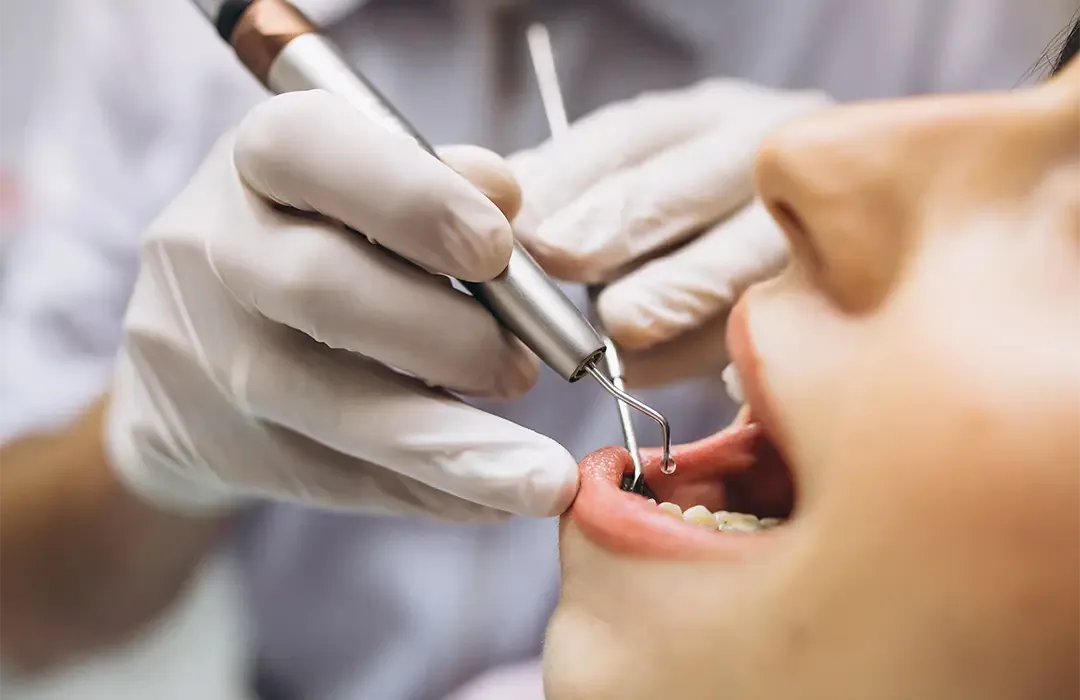
The first and most basic stage of periodontal treatment is non-surgical mechanical cleaning. In the scaling procedure, calculus and plaque deposits on the tooth surface and at the gum line are removed with the help of ultrasonic devices and special hand instruments.
If the infection has extended beneath the gums and created deep pockets, Subgingival Curettage (Root Surface Planing) is performed. In this painless procedure carried out under local anesthesia, inflamed tissues inside the gum pocket and toxins attached to the root surface are cleaned with special curettes. The smoothed root surface allows the gum to reattach in a healthy way.
Advanced Surgical Procedures: Flap Surgery, Bone Graft, and Tissue Grafts
In advanced cases where pocket depth exceeds 5-6 millimeters and there is deep bone resorption, surgical periodontal treatments come into play. During Flap Surgery, the doctor gently lifts the gum under local anesthesia to gain direct access to the root surfaces and bone defects. All infected granulation tissues in the area are removed; Bone Graft (Bone Powder) and barrier membranes are placed to repair the resorbed bone areas.
On the other hand, in cases of gum recession that cause aesthetic concerns and cold-hot sensitivity, Free Gingival Graft or Connective Tissue Graft procedures are performed. A small tissue piece taken from the patient's own palate is transplanted to the recession area, biologically covering the exposed root surface.
Laser-Assisted Treatments, Pink Aesthetics, and Peri-Implantitis
In a Bursa periodontology clinic equipped with up-to-date technology, soft tissue lasers increase the comfort and success of treatment. Laser energy sterilizes the bacteria in periodontal pockets to a high degree and speeds up tissue healing.
In addition, excessive visibility of the gums when smiling (Gummy Smile) or asymmetries in gum levels are corrected painlessly and without sutures with Gingivectomy and Gingivoplasty (Pink Aesthetics) procedures. Furthermore, gum and bone inflammation developing around previously placed dental implants (Peri-Implantitis) is also treated by periodontology specialists to prevent implant loss.
In the table below, you can review the clinical scope of the main treatment methods applied within the Bursa periodontology clinic:
Treatment Method | Main Clinical Purpose | Application Method and Comfort | Ideal Patient Profile |
Scaling and Polishing | Cleaning plaque and tartar from the tooth surface | Ultrasonic cleaning that does not require anesthesia | Patients with gingivitis and regular preventive care |
Subgingival Curettage | Cleaning the pockets beneath the gums and the root surface | Painless root planing under local anesthesia | Initial and moderate periodontitis cases |
Flap Surgery and Grafting | Cleaning deep bone defects and building bone | Tissue and bone repair with microsurgical technique | Chronic cases with advanced bone resorption |
Connective Tissue Graft | Replacing receded gum and relieving sensitivity | Root surface coverage with tissue taken from the palate | Those with advanced gum recession and root exposure |
Gingivectomy (Pink Aesthetics) | Making gum levels symmetrical | Laser-assisted shaping without sutures | Those with gummy smile and tissue overgrowth |
Treatment Process, Digital Diagnosis, and Long-Term Protection Protocols
The foundation of successful periodontal treatment is based on an accurate diagnosis and the patient's post-treatment oral hygiene discipline. In any Bursa periodontology clinic evaluation, the process begins with scientific measurement criteria.
Periodontal Probing, 3D Tomography, and Personalized Planning
At the initial examination, the specialist physician records pocket depth and the bleeding index from six different points around each tooth using a millimetric measuring tool called a "periodontal probe." A panoramic X-ray is used to examine the overall level of the jawbone; if there is suspicion of advanced bone loss or peri-implant infection, 3D Dental Tomography (CBCT) is taken and the bone walls are analyzed in three dimensions. In light of the data obtained, a personalized treatment schedule is created for the patient.
Post-Treatment Care and Supportive Periodontal Therapy (Maintenance)
Periodontal diseases are conditions with a chronic tendency; if oral hygiene is neglected after treatment is completed, the disease may recur. For this reason, patients under the care of a Bursa periodontology clinic should pay attention to the following daily care rules:
Teeth should be brushed at least twice a day with soft or medium-bristled brushes that do not traumatize the gums, using a sweeping motion from the gums toward the teeth.
A standard toothbrush can clean only 60% of the spaces between teeth; therefore, for the remaining 40% interproximal area, dental floss or an interdental brush in the size determined by the doctor should be used every evening.
Smoking narrows the capillaries that nourish the gum tissue, both hiding the signs of the disease (bleeding) and reducing the healing response to treatment by half; tobacco products should be avoided during the healing process.
After active treatment is completed, Supportive Periodontal Therapy check-up appointments should be attended regularly every 3 to 6 months to prevent recurrence of the disease.
Conclusion: Protect Your Natural Teeth for Life with Healthy Gums
Gum bleeding should never be considered normal; it is an important warning signal from your body against infection in the mouth. While gum diseases diagnosed at an early stage can be completely cured with simple and comfortable procedures, neglected cases lead to the loss of healthy teeth and implants.
By contacting a Bursa periodontology clinic that provides services with scientific diagnostic methods, biomaterial-supported regenerative techniques, and laser technologies, you can secure your gum health. Do not delay making an appointment for a specialist periodontology examination before your teeth become loose or advanced bone loss develops.