
 Our Location

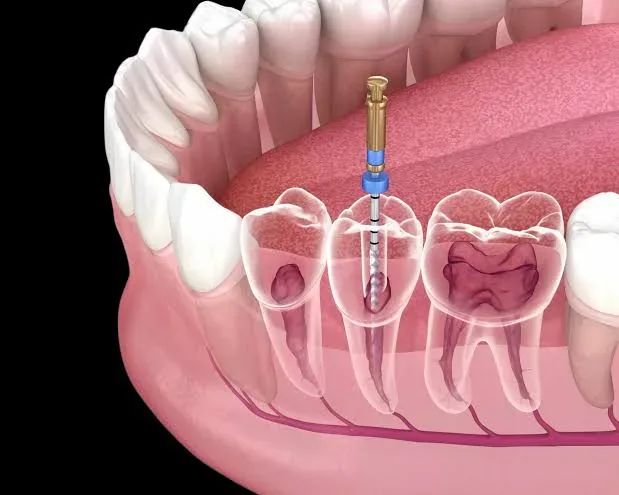
Toothache, sensitivity to hot and cold, or pain during chewing may indicate that the pulp inside the tooth has been damaged. In particular, deep decay, cracks, trauma, or repeated dental treatments can lead to inflammation or infection in the nerve and blood vessel tissue inside the tooth. In such cases, root canal treatment may be performed instead of extracting the tooth, with the aim of keeping the natural tooth in the mouth.
So, how is a root canal treatment performed? The procedure consists of several stages, such as evaluating the tooth, numbing it, cleaning the root canals, shaping them, and filling and sealing them with the appropriate material.
What Is Root Canal Treatment?
Root canal treatment is an endodontic treatment performed when the pulp, which is located in the center of the tooth and contains the nerve and blood vessel tissues, becomes inflamed or infected. The main purpose of the treatment is to remove the infected tissue and bacteria, clean and shape the root canals, and seal the canals tightly to prevent reinfection.
With this procedure, in suitable cases, it may be possible to keep the natural tooth in the mouth without the need for extraction.
How Is Root Canal Treatment Performed?
The duration of root canal treatment and the number of sessions may vary depending on the condition of the tooth, the root canal structure, and the level of infection. In general, the procedure goes through the following stages:
1. The Tooth Is Examined
In the first stage, the dentist evaluates the complaints and carries out the necessary checks. Imaging methods such as X-rays may be used to assess the root structure of the tooth and the surrounding tissues. In this way, it is determined whether treatment is necessary and the scope of the method to be applied.
2. The Tooth Is Numbed
Before root canal treatment, local anesthesia is generally applied. In this way, while the patient remains awake during the procedure, pain and sensitivity in the treated area are largely controlled.
It is also important to keep the tooth dry and clean during treatment. For this reason, in some cases, a special isolation sheet called a rubber dam is used.
3. The Root Canals Are Accessed
A small opening is made in the upper part of the tooth to reach the pulp tissue and root canals inside the tooth. In teeth that have previously had fillings or crowns, the access procedure may be planned according to the existing restoration.
4. The Infected Tissue Is Cleaned
The inflamed or infected pulp tissue inside the tooth is removed with special dental instruments. Then the root canals are cleaned, shaped, and disinfected. This stage is one of the most important parts of the treatment in terms of removing bacteria and debris from the canal as much as possible.
5. The Canals Are Filled and Sealed
The cleaned and shaped root canals are filled with a suitable filling material. Then the upper part of the tooth is sealed to prevent bacteria from re-entering the canal system from the oral environment. In some cases, a temporary filling may be used depending on the stages of treatment.
6. The Upper Restoration of the Tooth Is Performed
After root canal treatment is completed, a restoration such as a filling or crown may be applied depending on the structural condition of the tooth. In teeth with significant loss of tissue, a crown may be preferred to protect the tooth and help its normal function.
How Long Does Root Canal Treatment Take?
The duration of root canal treatment is not the same for every patient. The position of the tooth, the number of root canals, the complexity of the canal anatomy, and the condition of the infection may affect the duration of the procedure. While some treatments can be completed in a single session, two or more appointments may be necessary for some patients.
In cases where a temporary filling is required during treatment, an additional appointment may be planned for the permanent restoration.
What Should Be Considered After Root Canal Treatment?
After treatment, the effect of anesthesia may continue for a few hours. In addition, temporary sensitivity or mild pain may occur in the treated area. If these complaints persist or worsen, the dentist should be contacted.
After root canal treatment, it is important to pay attention to the following points:
Follow-up appointments recommended by the dentist should be attended.
If a permanent filling or crown is needed, the treatment should be completed.
Oral and dental hygiene should be maintained regularly.
If severe or increasing pain, noticeable swelling, or similar problems occur in the treated tooth, a dentist should be consulted.
Excessive force should not be applied to the tooth before treatment is completed.
Can Root Canal Treatment Save the Tooth?
One of the main goals of root canal treatment is to treat an infected or severely damaged tooth without extracting it and keep it in the mouth. However, not every tooth is suitable for treatment. Factors such as whether the tooth has enough structure for restoration, the condition of the roots, and the level of infection should be evaluated.
For this reason, along with the question how is root canal treatment performed, the answer to the question, “Is my tooth suitable for root canal treatment?” can only be clarified after a dental examination.
YOU MAY ALSO BE INTERESTED IN: How Long Does Implant Treatment Take?
Conclusion
Root canal treatment is based on removing infected or inflamed tooth tissue, cleaning the root canals, and filling and sealing them. Thanks to modern techniques and appropriate restoration options, it may help preserve the natural tooth. If there are symptoms such as toothache, long-lasting sensitivity to hot and cold, pain when chewing, or swelling, it is important to consult a dentist without delay.